Wilderness Team Building Activities That Transform Your Team
Take your team out of the office and into the woods, where shared challenges and real skills build trust, communication and resilience that last.

Most team building days are forgotten by Monday morning. You do an escape room, share a few drinks, and everyone goes back to the same dynamics, the same silences in meetings, the same friction under pressure.
Wilderness team building activities work differently. They take your team out of the office and into an environment where the usual rules do not apply. No job titles. No emails. No performance pressure. Just people, shared challenges, and the natural world.
At Into The Woods, we have run wilderness team building events for companies across Kent and the South East. The pattern is always the same: people arrive guarded, and leave connected. This article explains why wilderness team building works, what activities deliver the strongest results, and how to plan a day your team will actually remember.
Why wilderness team building works when office events do not
Traditional team building fails for a simple reason. It happens in the same environment where work happens, so it cannot break the patterns work creates. People bring the same tensions, the same habits, the same hierarchy into the room.
Wilderness activities shift the setting completely. The forest does not care about your job title. A fire will not light itself because you are a director. A shelter will not stay up because you are the loudest voice in the room. The woods reward patience, communication and cooperation. Nothing else.
The science behind nature and team connection
The research on nature and human performance is striking:
- •Just 20 to 30 minutes in a natural setting produces a measurable drop in cortisol, the body's main stress hormone.
- •Stanford research found a 50% increase in creative problem solving after a walk in nature.
- •Tackling outdoor challenges as a group releases oxytocin, the hormone linked to trust and bonding.
- •Employees with high wellbeing report half as much absence and two thirds less presenteeism than those with low wellbeing.
When you combine nature's stress reducing effects with shared physical challenges, you create the conditions for genuine connection. People talk differently around a fire than they do across a desk.
Breaking down hierarchy
In the woods, no one is too senior to fetch firewood. The quiet team member who never speaks in meetings might turn out to be the best at knots. The manager who usually directs everything has to step back and listen.
This matters. Most workplace friction comes from people not truly seeing each other. Wilderness activities strip away the roles and let colleagues meet as people. That shift carries back into the office.
The best wilderness team building activities
Not every outdoor activity builds a team. The best ones share three qualities: they require real cooperation, they have a tangible outcome, and they create moments people remember. Here are the wilderness team building activities we see deliver the strongest results.
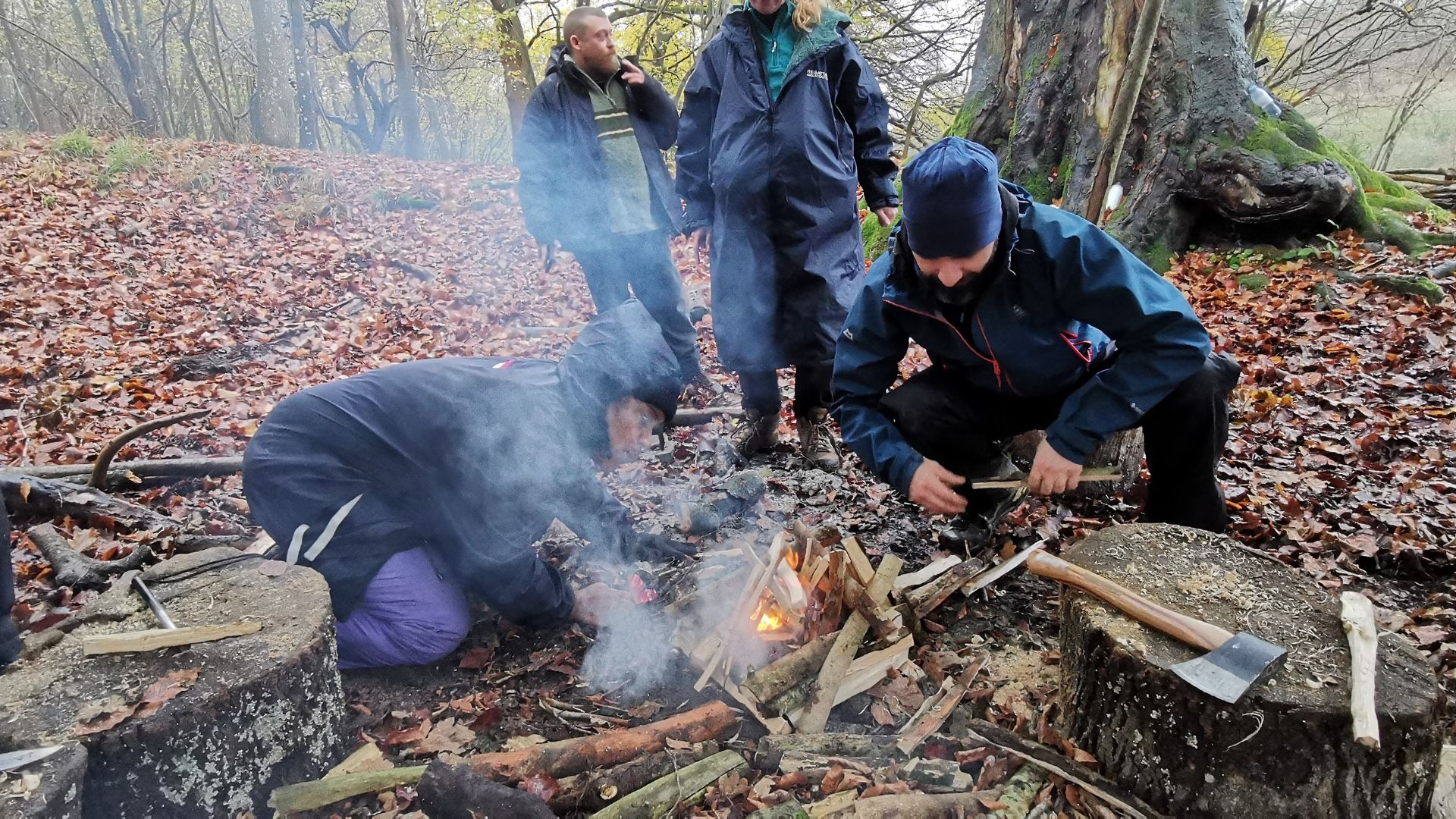
1. Fire building
Few activities bond a group like making fire together. Teams collect natural tinder and kindling, learn to use ferro rods, and work together to nurture a spark into a flame.
Why it builds teams:
- •It demands patience and clear communication
- •Everyone shares the moment the fire catches
- •It teaches resilience when the first attempts fail
- •It taps into something primal and genuinely memorable
Fire is also a natural gathering point. Once it is lit, the group sits around it, conversations open up, and the formal workshop energy of the day melts away.
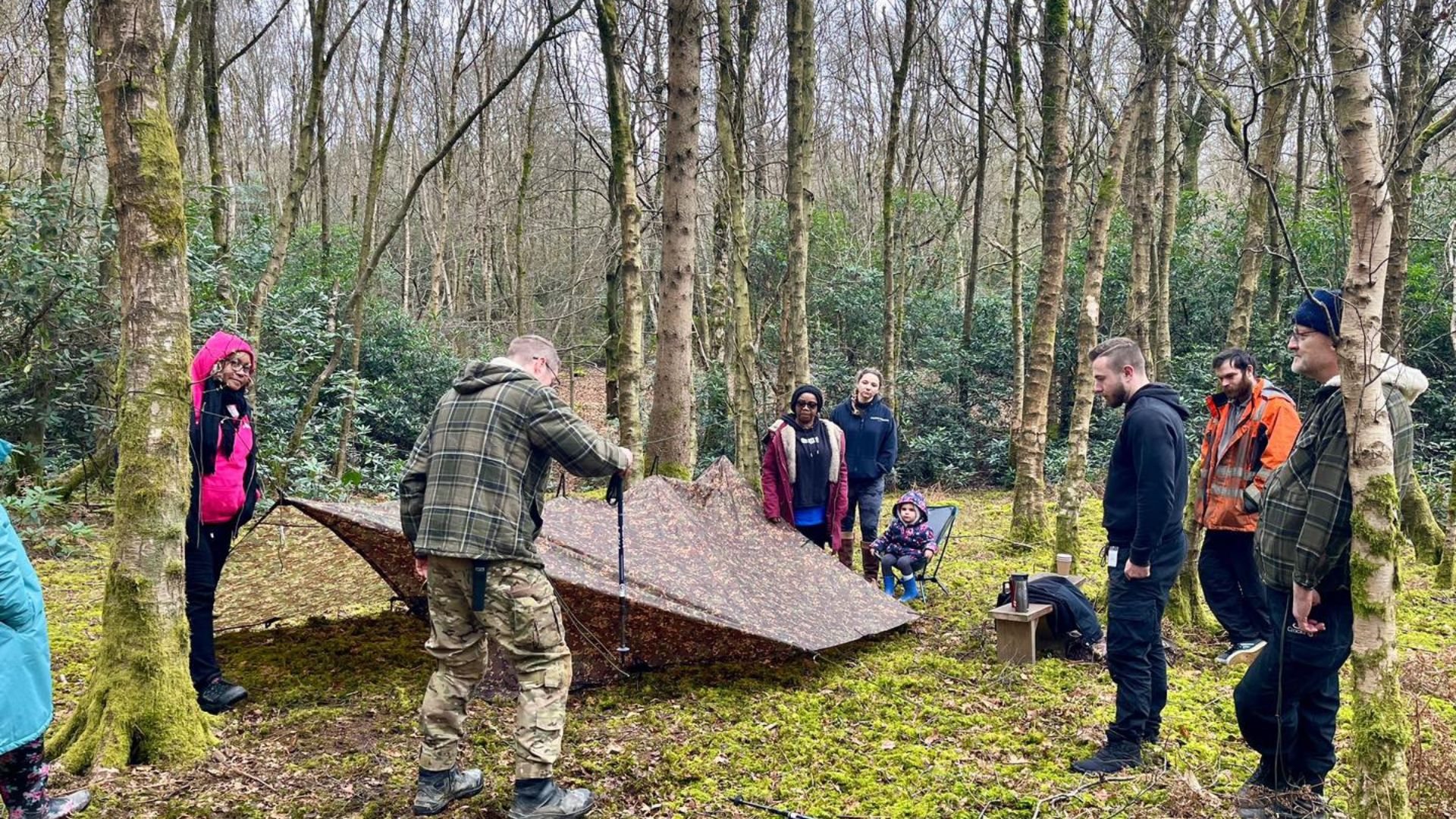
2. Shelter building
Teams are given tarps, paracord and natural materials, then challenged to build a shelter that can withstand the weather.
Why it builds teams:
- •It requires planning, role allocation and trust
- •It teaches problem solving under real constraints
- •It produces a tangible result the whole group can take pride in
- •It reveals natural leaders and quiet contributors
Shelter building works because the feedback is honest. The shelter either stands or it does not. Everyone can see the result of their effort, and that shared outcome is what builds team identity.
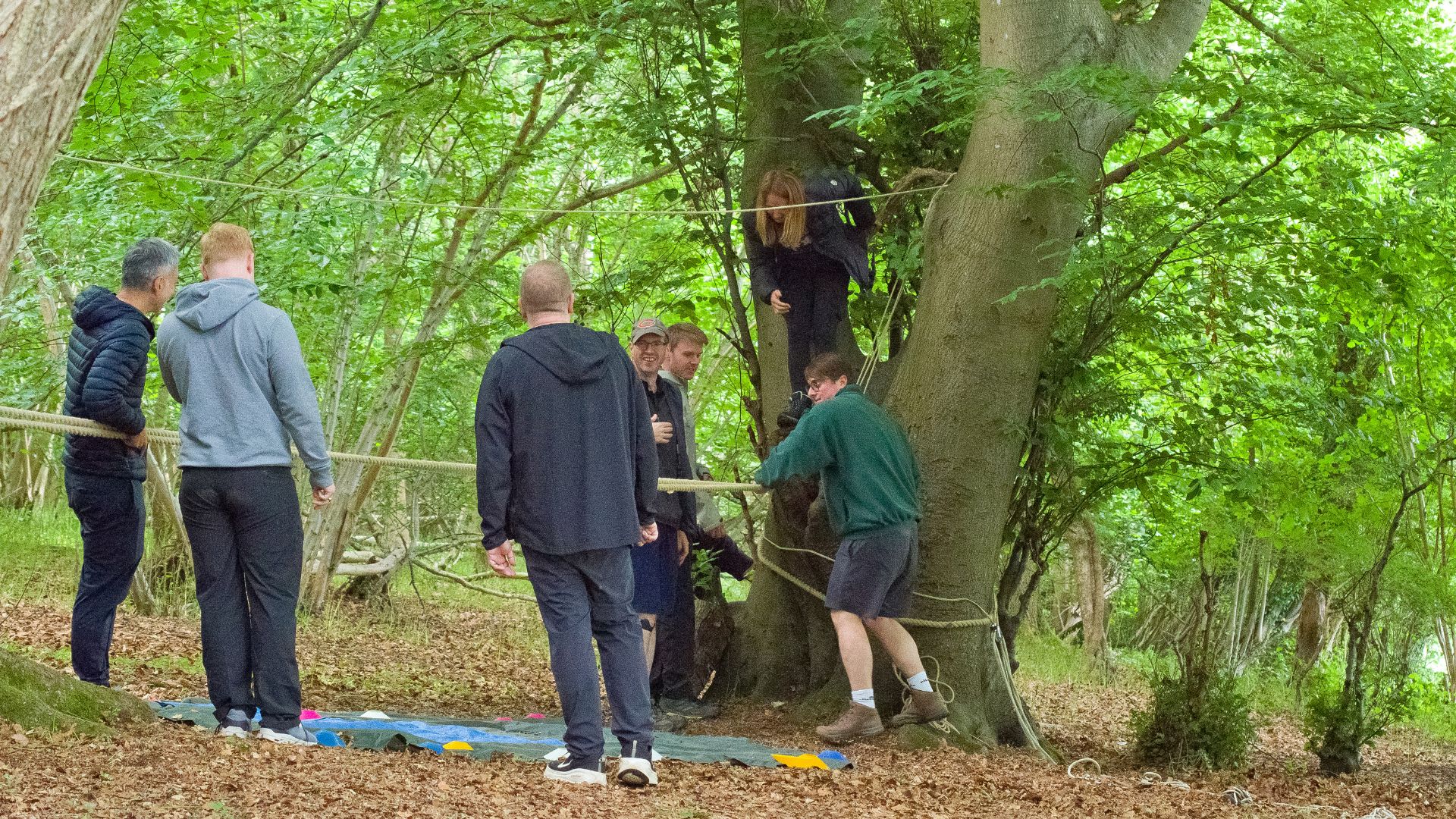
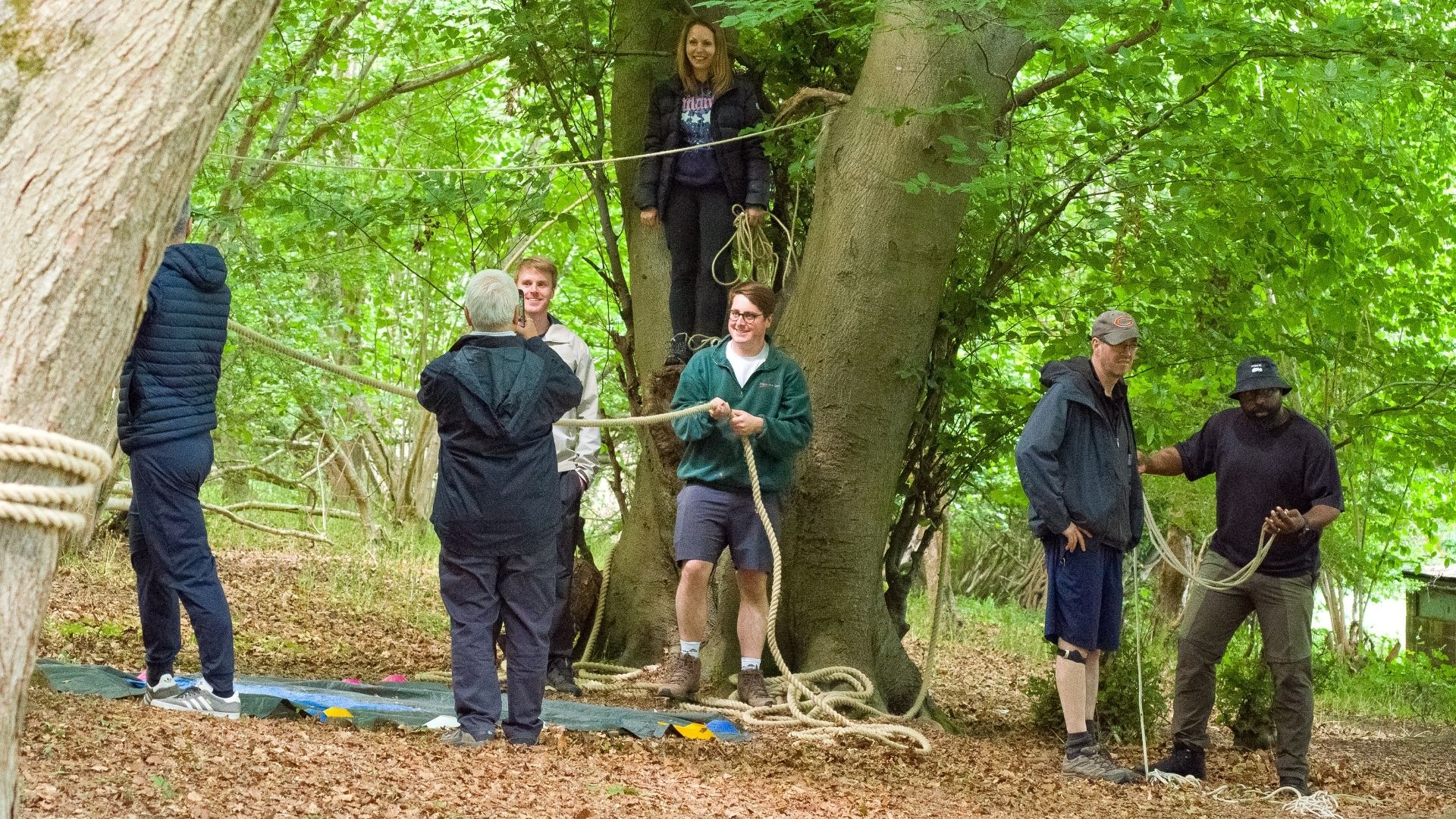
3. Rope bridge building
Few activities test a team like designing and crossing a rope bridge. Teams learn knots and lashings, then construct something strong enough to hold their weight before crossing it one by one.
Why it builds teams:
- •Trust is tested the moment someone steps onto the bridge
- •It demands clear communication and shared responsibility
- •It builds confidence and surfaces leadership
- •The shared risk creates an instant bond
This is one of the most powerful wilderness team building activities we run. The moment a colleague steps onto a bridge the team built together is the moment the team stops being a group of colleagues and becomes something more.
4. Problem solving and pioneering projects
From building catapults and trebuchets to constructing bamboo towers and cranes, these activities focus on imagination, engineering and friendly competition.
Why it builds teams:
- •Encourages creative thinking and shared problem solving
- •Channels energy into something physical and fun
- •Builds connection through a common goal
- •Competition between teams builds energy and laughter
5. Blindfold string trail
Participants follow a rope trail through the woods while blindfolded, relying entirely on their teammates to guide them around obstacles.
Why it builds teams:
- •Develops deep trust quickly
- •Sharpens listening and verbal communication
- •Creates a memorable, often hilarious shared experience
- •Highlights the importance of clear, calm instruction
What your team takes back to the office
The most common question we hear from HR and leadership teams is a fair one: this sounds great, but does it actually translate back to work?
The honest answer is yes, but not in the way people expect. Wilderness team building does not teach a framework. It changes how people relate to each other. Teams come back from the woods:
- •Talking more, because they have practised real listening
- •Thinking more creatively, because stepping away from screens resets the mind
- •Trusting each other more, because they have faced and overcome a challenge together
- •Understanding each other as people, not just job titles
Those shifts stick. A month later, leaders tell us meetings feel more focused, tensions resolve faster, and new ideas surface more freely. That is the real return on a day in the woods.
How to plan a wilderness team building day
A successful wilderness team building day comes down to a few simple decisions.
Know what your team needs
Are you onboarding a new team, repairing friction in an existing one, or rewarding a group that has been working hard? Each goal points to a slightly different mix of activities. Be honest about the real purpose before you book.
Choose the right location
The setting matters. Ancient woodland, space to build, and a real sense of being away from the office all contribute to the effect. Our Kent woodland sits between two Areas of Outstanding Natural Beauty, which gives teams a genuine sense of escape.
Mix challenge with reflection
The best days balance activity with space to reflect. A fire at the end of the day, shared food, and time to talk lets the experience settle and turns a good day out into something that lasts.
Keep it inclusive
Wilderness team building activities should work for every fitness level and personality. Our events are designed so that everyone contributes, regardless of age, background or physical ability. No one is left watching from the sidelines.
Why companies choose Into The Woods
We run wilderness team building events for corporate teams, charities and community groups across Kent and the South East. Every event is designed around your team and your goals, led by experienced instructors who understand both the outdoors and the dynamics of a group.
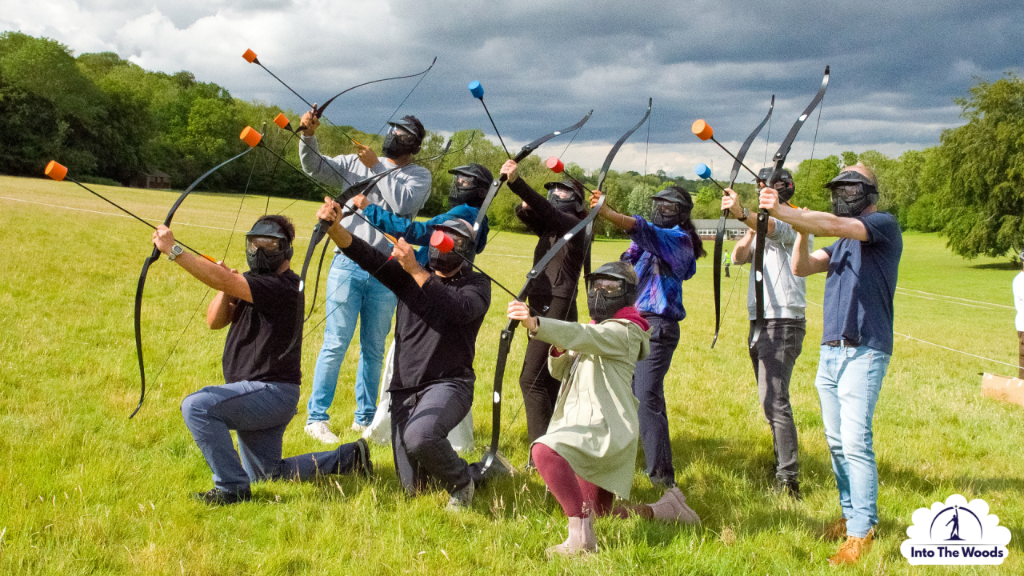
Our recent corporate program for Adobe brought together around 75 delegates for two days of tower building, archery tag, catapult building and rope bridge challenges. Those shared challenges created team cohesion that generic wellness perks simply cannot replicate.
Ready to get your team into the woods?
If you are looking for wilderness team building activities that build real trust, communication and resilience, we would love to help you plan a day your team will still be talking about weeks later.
Reach out to Into The Woods to design a wilderness team building day tailored to your team.
Ready to experience the woods for yourself?
See Upcoming Events