Why Screens Have a Negative Impact on Connection - and How Nature Helps Restore It


Screens rule our lives. We all know this. But the cost goes beyond tired eyes or stiff necks. It's our human connection - the glue that holds any successful team together - that suffers the most.
The Unseen Cost of Too Much Digital Time
The figures paint a grim picture:
- •British adults devote over 6 hours to screen time (Ofcom, 2024)
- •Almost 75% of remote employees say they feel disconnected from their coworkers (Buffer State of Remote Work, 2024)
- •Nonstop notifications cause a dopamine-cortisol swing, which has a link to increased stress, worry, and even exhaustion (American Psychological Association)
What seems like efficiency often wears away our focus and compassion. When our conversations happen through screens, we miss subtle signs - voice inflection, physical gestures, actual presence. Misunderstandings increase. Relationships suffer.
My Observations at Every Retreat
When groups first show up for an Into The Woods event, I notice signs of digital burnout: people clutching phones, tense shoulders, minds still partly focused on their emails.
But the natural world moves at its own pace.
- •First hour: Folks check their screens then put them away
- •By midday: Talks get deeper, laughs come more
- •Evening fire: Phones slip from memory. Everyone's in the moment
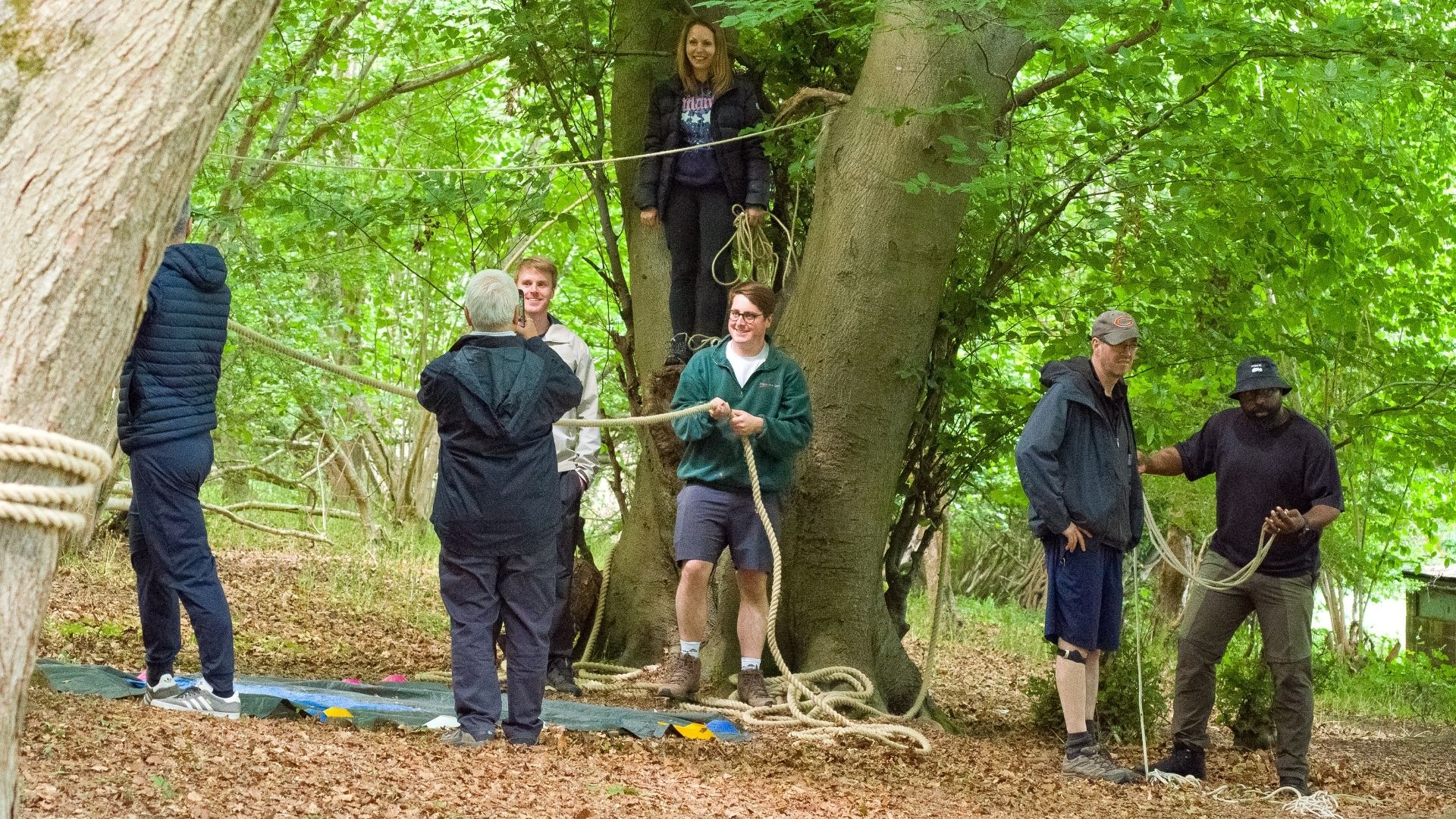
I've seen engineers come up with ideas while whittling tent pegs, HR teams open up as they build rope bridges, and shy folks shine when they get the hang of a ferro rod. The forest brings out something genuine and universal in all of us.
Why Nature Has an Influence
Current brain research explains our experiences:
- •Lower cortisol: A quick 20-minute nature break has a measurable effect on reducing stress hormones
- •Boosted creativity: Research from Stanford shows a 50% increase in creative problem-solving after a simple walk in nature
- •Stronger trust: Tackling outdoor challenges together releases oxytocin - known as the "bonding hormone" - which helps build team unity
You don't need extreme adventures for these benefits. It's about being present: smelling wood smoke, feeling the rhythm as you tie a knot, hearing the wind rustle through trees.
How Forest Experiences Translate to Office Success
Teams head back to work after spending just one day in the woods:
- •🔊 Talking more - because they've practiced real listening
- •🧠 Coming up with fresh ideas - because the mind resets when it steps away from the digital rush
- •🤝 Building deeper trust - because they've tackled (and overcome) challenges together
These changes stick around. A month later, bosses email me saying meetings seem more focused, arguments cool down quicker, and new thoughts come more freely.
Practical Ways to Get Your Team Offline
You don't need a national park to begin. Try these steps:
Tech-Free Team Hour: Team meetings once a week without devices.
Walking 1:1s: Swap the meeting room for a nearby path.
Quarterly Nature Day: One full day to build outdoor skills, from starting fires to group tasks.
Each small action shows people that focus and being present are resources you can renew.
The Leadership Question
If you look after employee wellbeing, ask yourself: when did your team last spend a day together with no screens, no slides - just sky, fire, and talk?
The payoff isn't hard to see. It leads to less stress, a stronger team spirit, and workers who feel more like people again.
Ready to get your team offline and genuinely connected? Join us at Into The Woods.
Ready to experience the woods for yourself?
See Upcoming Events