Essential Bushcraft Skills to Learn in 2026

The pandemic sparked a remarkable comeback for bushcraft skills, and people now share a deep passion for wilderness self-reliance. My experience organising 'Into the Woods' events has shown how these ancient techniques help modern outdoor enthusiasts thrive. The Oregon Trail's history from 1840 to 1860 saw more than 400,000 pioneers who relied on survival knowledge that our comfortable modern lives rarely require.
Survival skills extend beyond simple outdoor activities. Many bushcraft projects work well as home practice before wilderness testing. You can build a primitive buck saw in about an hour or learn the 'Figure Four' deadfall trap. These trailblazing solutions connect us to our ancestors who built fires and boiled water daily.
The Spirit of Bushcraft: Why These Skills Still Matter
Nights spent under star-filled skies watching our hand-crafted fire light up participants' faces at "Into the Woods" events have taught me something. One truth stands out: most of us would be lost in a true survival situation because civilisation's comforts have made us soft.
Our separation from nature runs deeper than missing practical skills. Bushcraft skills have become crucial because they link us to our primal heritage and give us something our tech-filled lives miss.
"Nature's not trying to sell you anything, it hasn't got any agendas - it's just honest and true," a seasoned bushcrafter once told me. This raw authenticity pulls people back to ancient ways of working with their environment.
Bushcraft goes beyond outdoor survival. It lets you interact with nature in a meaningful way and helps you understand your limits with the environment. Creating fire through friction, building shelters from forest materials, or identifying edible plants connects us to our ancestors' ways.
Practicing essential bushcraft skills brings several benefits:
- •Mental well-being - The outdoors, away from screens, changes how your brain processes information
- •Emotional healing - People need to connect with nature; learning new skills outdoors helps improve mental health
- •Primal comfort - Fire has a calming effect; it touches something deep within us
- •Character development - Bushcraft builds patience, perseverance, humility, and resilience
Getting Started: Basic Bushcraft Skills for Beginners
Nothing beats seeing someone's face light up after they create their first fire without matches or build a shelter that keeps them dry in a storm. Here's how to get started with these vital techniques.
Fire Starting with Natural Materials
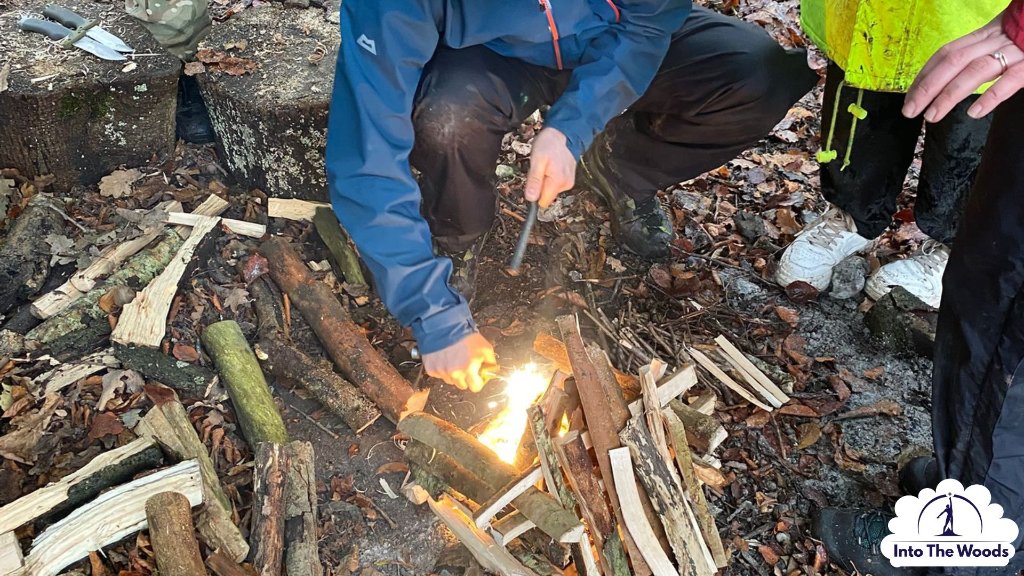
Fire stands at the heart of bushcraft skills. The simple truth about creating fire lies in understanding three key components: tinder, kindling, and fuel.
You need the right tinder to catch a spark and start your fire. Natural tinders you can find include:
- •Birch bark (papery and highly flammable)
- •Dry grass and leaves
- •Pine needles and plant fibres
- •"Old man's beard" lichen (found on spruce, birch, and fir trees)
Preparation is vital. Gather more natural materials than you think you'll need. Start small and build up step by step.
Several methods exist to create that first spark without modern tools. Percussion methods use flint against steel to create hot metal particles that ignite tinder. Friction methods generate an ember by grinding materials together. Hand drill or bow drill techniques need practice but give amazing satisfaction once you master them.
Simple Shelter Building Techniques
A lean-to makes one of the easiest yet most effective shelters for beginners. Support a long pole horizontally between two trees. Cover one side with smaller poles or branches at a 45-degree angle, then add vegetation on top for waterproofing.
The debris hut gives great insulation when you can't have a fire. Make an A-frame structure with sticks, then pile several feet of leaves, grass, or other vegetation to create a protective dome.
Smart shelter location depends on these key principles:
- •Pick elevated ground to avoid flooding
- •Think about wind direction and exposure
- •Make sure building materials are close by
- •Use natural features in your design
Finding and Purifying Water
Water ranks as the most vital survival need - even skilled bushcrafters won't last three days without it.
Moving water sources usually contain fewer contaminants than still water. Animal tracks often guide you to water.
Purification must follow collection. Boiling works best - keep water at a rolling boil for at least four minutes to kill harmful organisms. You can create a simple filtration system using layers of sand, gravel, and charcoal. Rain collection offers another option - stretch a tarp between trees to catch rainfall, one of nature's purest water sources.
Advanced Skills: Taking Your Bushcraft Further
Navigation Without Technology
Map and compass skills have enormous value. True north differs from magnetic north, and knowing this distinction can save your life.
Natural navigation techniques complement map skills. Trees often grow moss on their north-facing sides. Tracking the sun's movement helps determine east and west throughout the day.
Foraging and Wild Edibles
Wild food exists abundantly once you know what to look for. But never consume any wild plant unless you're completely certain of its identification - this is non-negotiable.
Safe beginners' plants to identify in the UK include:
- •Nettles - Highly nutritious, excellent in soups and teas
- •Elderflower and elderberries - Seasonal foraging classics
- •Wild garlic - Found in woodland areas in spring
- •Blackberries - Universally recognisable and abundant
Start with just a few easily identifiable species and build your knowledge gradually.
The Bigger Picture: Bushcraft and Modern Life
Bushcraft helps counter our fast-paced, tech-dependent lives. These skills let you escape urban noise and truly disconnect in wild places.
Years of teaching at "Into the Woods" revealed something surprising: bushcraft brings joy. Learning ancient survival techniques passed down through generations thrills people. Every aspect, from making tools to cooking over open fires, offers new learning and fun experiences.
Bushcraft creates community beyond personal growth. People connect naturally around flickering flames while sharing meals made from foraged ingredients. These moments build bonds that digital interaction can't match.
Ready to begin your bushcraft journey? Join us at Into The Woods - where ancient skills meet modern lives.
Ready to experience the woods for yourself?
See Upcoming Events